Quick Summary
Judge signage production by artwork review, proofing, material fit, finishing, and accountability for errors. Streamline Digital Imaging, a family-owned Snohomish, Washington shop, runs artwork review, proofing, and production in-house under one team. Compare providers against the same criteria using identical inputs.
- Per a 2026 Harris Poll survey cited in the article, 84% of consumers say signs affect whether they buy.
- Review artwork and get a digital proof before production to catch file and color problems early.
- Match the sign material to indoor or outdoor exposure, since it drives lifespan and warranty eligibility.
- Normalize every bid to the same scope, including design, shipping, and installation, before comparing prices.
- Confirm the permit is issued before fabrication starts to avoid expensive rework.
Table of Contents
- What Makes Signage Production High Quality
- Top Signage Production Providers Compared
- Choosing Business Sign Materials for Durability
- Indoor and Outdoor Options: Custom Wall Signs and Building Signs
- Outdoor Building Signs and What Affects Timeline and Cost
- Booking Your Signage Order with Streamline Digital Imaging
- Frequently Asked Questions
What Makes Signage Production High Quality
Good signage is judged on how it reads from across a parking lot, not on a proof screen. Per the Harris Poll survey reported by Signarama (2026), 84% of American consumers say a business's signs affect whether they buy from that business. The Sign Effect: 2026 Consumer Signage Survey That makes production quality a sales issue, not just a design preference.
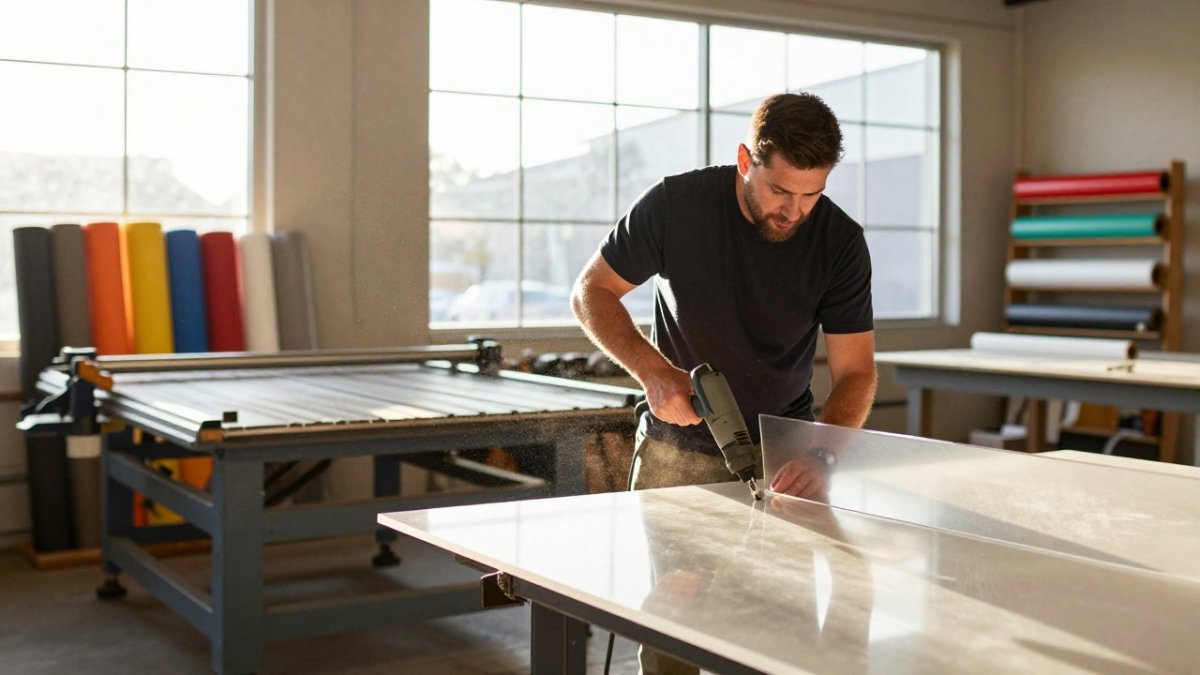
Quality in signage comes from four things working together: artwork that is ready to print, materials suited to the location, clean finishing, and a production team that catches problems before a sign goes out the door. At Streamline Digital Imaging, we review artwork and proof jobs in-house before production starts, because many quality problems begin in the files. Get help preparing artwork for custom printing so logos, layout, resolution, scale, and placement are checked before production.
A Practical Framework for Judging Production Quality
When you compare providers, use the same checklist for each one:
- Artwork review: Does the shop check your artwork before printing?
- Proofing: Do you receive a digital proof before production?
- Material fit: Does the shop explain which material suits your indoor or outdoor use?
- Finishing: Are edges and surfaces clean and consistent?
- Accountability: Who answers if a sign arrives with an error?
Ask each provider to show samples of finished work in the material you need. A strong shop will explain its process without hesitation.
Top Signage Production Providers Compared
Most provider roundups list names and product categories and stop there. The more useful comparison is against a fixed set of production criteria, so you can score each shop the same way. Use the framework below on every quote you collect.
| Evaluation Criterion | What to Ask | Why It Matters |
|---|---|---|
| Artwork review | Does the shop check resolution, scale, bleed, and color before printing? | Most defects originate in supplied files, not the press. |
| Proofing | Do you get a digital proof showing exact output, including color mode? | Prevents surprises on brand colors and small type. |
| Material fit | Is the substrate rated for your indoor or outdoor exposure? | Determines lifespan and warranty eligibility. |
| Finishing | Are edges, mounting holes, and surfaces clean and consistent? | Finishing is where low-cost shops cut corners. |
| Quality control | Who inspects the finished piece, and against what standard? | Accountability is the difference between a reprint and a runaround. |
| Installation and delivery | Is installation included, subcontracted, or excluded? | Installation is often the largest hidden line item. |
Streamline Digital Imaging is a family-owned shop in Snohomish, Washington, that has run an in-house workflow since 2009. Artwork review, proofing, and production happen under one roof, so accountability stays with one team.
Watch out: a low quote that excludes design, shipping, or installation can cost more than a higher quote that bundles them. Normalize every bid to the same scope before comparing.
When you request quotes, send the same artwork, dimensions, mounting location, and deadline to each provider. Identical inputs are the only way to compare production quality and price fairly.
Choosing Business Sign Materials for Durability
Material choice drives how long a sign lasts. Triton Design (2026) identifies aluminum composite panels and acrylic as popular choices for business signs. 2026 business sign trends guide Each suits different conditions.
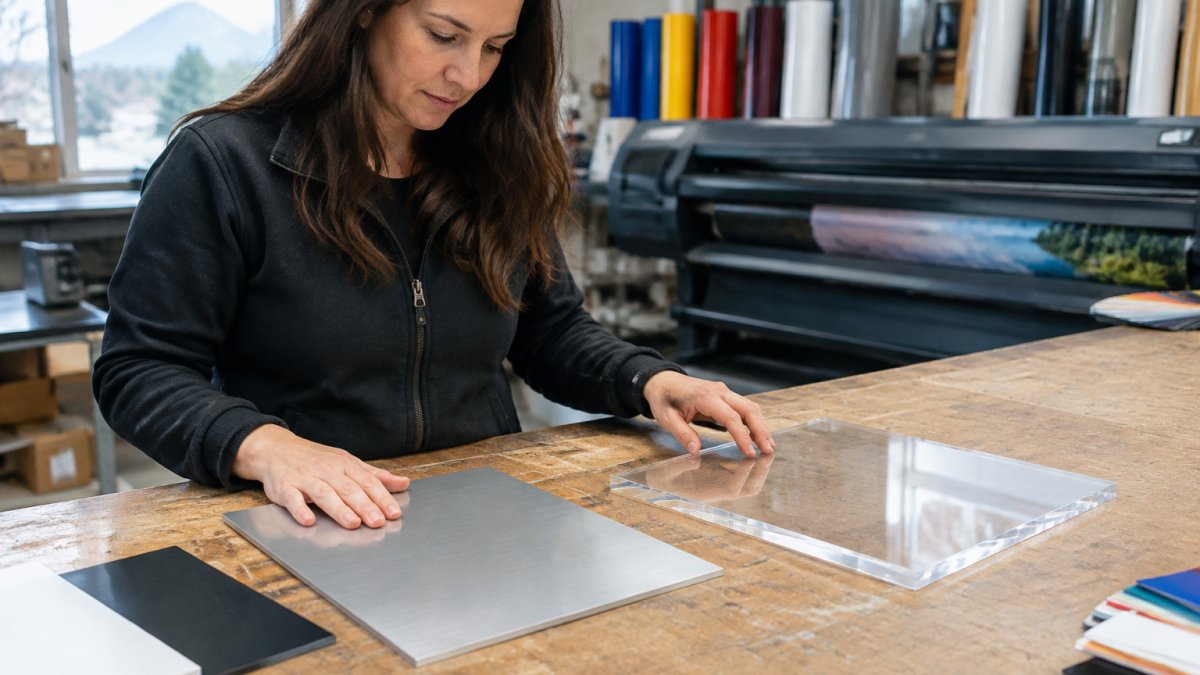
- Aluminum composite panels: Rigid and weather-resistant, a common choice for outdoor building signs.
- Acrylic: Clean-looking and suited to indoor displays, wall signs, and lit applications.
- Vinyl and decals: Flexible and economical for windows, vehicles, and temporary graphics.
Match the material to the environment. A sign exposed to sun, rain, and wind needs a different specification than one in a lobby. Ask your provider which materials they recommend for your exact location.
!A business owner in a Snohomish print shop running a hand over an aluminum composite panel and an acrylic sample on a workbench
Indoor and Outdoor Options: Custom Wall Signs and Building Signs
Indoor and outdoor signs solve different problems. Wall signs and interior graphics guide customers and reinforce your brand inside the space. Outdoor building signs must be read from the street and hold up to weather.
If you need banners, yard signs, posters, or wall graphics for a short campaign, you can browse custom banners and signs to compare options.
Outdoor Building Signs and What Affects Timeline and Cost
Outdoor building signs often involve several sequential steps, including design approval, fabrication, permitting, and installation.
| Stage | Typical Range | What Drives It |
|---|---|---|
| Artwork review and proofing | 1-3 business days | File readiness and number of revision rounds |
| Design approval | 1-5 business days | Internal stakeholder sign-off |
| Permit application and review | 1-6 weeks | Local sign code, zoning, and whether the sign is illuminated |
| Material sourcing | 2-10 business days | Substrate availability and custom colors |
| Fabrication | 3-15 business days | Size, complexity, and finishing requirements |
| Shipping or delivery | 1-7 business days | Distance and freight class |
| Installation | 1-3 days on site | Mounting surface, height, and electrical work |
Signs By Tomorrow identifies size, materials, lighting, installation, and permits as the main cost factors for custom business signs. 2026 custom business sign cost guide In practice, the largest swings come from three places: illuminated signs require electrical work and a licensed electrician; monument signs require footing and sometimes engineering; and large signs often trigger permit review that adds weeks.
Plan for permits early. Local sign codes govern size, height, setback, illumination, and placement. Ask your provider whether they handle permit paperwork or whether that falls to you, and confirm whether installation is included and what it covers.
Watch out: ordering fabrication before permit approval is the most common cause of expensive rework. Confirm the permit is issued before the shop cuts material.
To keep a project on schedule, approve proofs in one consolidated round, order materials and permits in parallel where allowed, and schedule installation only after the sign is on site and inspected.
Booking Your Signage Order with Streamline Digital Imaging
Start by sending your artwork and a clear description of the sign's size, location, and purpose. Streamline Digital Imaging reviews artwork, then returns a digital proof for approval before production begins.
When you are ready to move forward, visit the custom printing page to see the options available. For quotes, pickup, or production questions, contact Streamline Digital Imaging through its website for current details.
Ready to start? Submit a custom print order or upload artwork to request a quote.
Frequently Asked Questions
What types of signs are best for businesses?
The best sign type depends on where it must be seen and what it must do. Outdoor building signs carry the brand from the street, wall signs identify a storefront or lobby, and banners and decals handle short-term promotions. The sign type you choose should match the moment when a customer first notices you.
How do I choose the right sign for my business?
Start with the viewing distance, the required lifespan, and the budget range you can support. A sign meant to be read from across a parking lot needs large lettering and high-contrast materials, while an interior wall sign can use lighter materials. Ask any provider for production timelines, what is included in the quote, and whether design and proofing are handled in house. Pricing depends on size, materials, quantity and installation, so request a quote for your exact specifications.
What materials are best for outdoor business signs?
Ask your provider which materials suit outdoor exposure and how the print or vinyl is protected against UV and moisture, since the finish often determines how long the sign keeps its color. Your provider can recommend the right combination for your climate and mounting location.
How long does it take to produce custom business signs?
Turnaround depends on sign size, material, finishing steps, and how quickly artwork is approved. Simple printed panels can move through production faster than sign assemblies that need fabrication, lighting or installation. Ask for a written timeline that separates proofing, production and delivery, so you know where a delay could occur. Streamline Digital Imaging can confirm the schedule for your specific order at the time you request a quote.